Posts Tagged ‘writing’

The 100 Hour Secret To Creating Speeches Everyone Will Want To Hear

Tuesday, August 24th, 2010
Image Credit Yes, I Do Have A Secret To Share With You

Yes, I Do Have A Secret To Share With You

Have you ever gone to hear someone speak and just been blown away by what they had to say? I mean their words just seemed to flow out of them and the stories that they told were right on the mark – a perfect complement to the point that they were trying to make? It turns out that you can deliver speeches like this too…

The Secret To Creating Great Speeches

If you want to be able to give a great speech, then you’ve got to be willing to invest the time to create a great speech. I’m not talking about shutting down for a couple of days and holing yourself up somewhere and banging out some fabulous bit of text – that never seems to happen when you need it to.
Nope, what I’m talking about is actually spending the time that it takes to really create a fantastic speech. How much time is that you ask? Probably somewhere in the neighborhood of 100 hours. Oh, oh – now I’ve gone and done it. It looks like you don’t think that this is possible. Turns out that you’re wrong – spend the time keeping a journal and you’ll have all of the high quality content that you’ll need to quickly make a great speech.

How To Spend 100′s Of Hours Creating A Speech

I’ll grant that you are correct that the next time someone asks you to give a speech, the last thing that you want to have to tell them is “could you get back to me after I spend a 100 hours just whipping up a speech for you?” Maybe there’s another way to do the same thing.
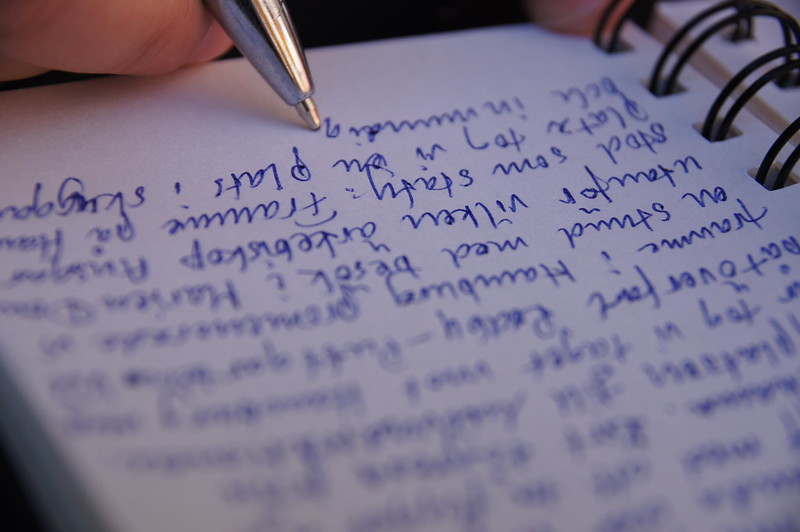
Keeping a personal journal is something that all too few of us speakers do, and yet all of us probably should do more of it. Life comes at us fast and if we’re not careful, it will blow right by us and we won’t even remember what happened to us. That’s why a journal is so important.
If you take the time either once a day or perhaps for short times throughout the day to write down what you are doing, how you are feeling, what challenges you are facing, then you will be able to remember everything that has happened to you. This is the raw material that makes for a great speech.

Strong Words Make Strong Images

Anybody can jot a few words down on a piece of paper. It takes a truly skillful speaker to capture just exactly how you are feeling when you update your journal.
One of the keys is to record how you are feeling using all of your 5 senses. Yes, this means taking note of what you are smelling (perhaps your own fear?), tasting, hearing, seeing, and feeling. These are the small details that you will need to use when you use your journal entries to create a fantastic speech.

What All Of This Means For You

The truly great speakers are the ones who have taken the time to create a speech that will resonate with their audience. This means that they have crafted both the words and the stories that will not only allow them to get their points across, but that they have also found a way to get their message to stick with their audience.
You have the ability to create this kind of speech also. What you are going to have to do is to take the time that is needed to create such a speech: 100 hours or more. It turns out that you can do this by keeping a journal – the time that you spend working on the journal will pay rich dividends when it comes time to create your next speech.
By recording everything that you are experiencing at any given moment in your journal, you’ll be able to go back and relive those moments when you are in the process of creating your memorable speech. The secret is to not gloss over how you feel, but rather to record everything that is going on so that you can recapture it. Nobody said it was going to be easy, but it will be the best 100 hours that you’ve ever spent doing something…

- Dr. Jim Anderson
Blue Elephant Consulting –
Your Source For Real World Public Speaking Skills

Question For You: How often do you think that a speaker should update their journal? Once a day or more often?

Click here to get automatic updates when The Accidental Communicator Blog is updated.

What We’ll Be Talking About Next Time

PowerPoint is a double edged sword when it comes to giving a speech: it can be both a powerful way to add a multimedia impact to your speech or it can end up distracting your audience and taking their attention away from what you have to say. The experts know how to use this tool correctly and here are three of the ways they tame the PowerPoint beast…

Back To Basics: Presentation Tips 101

Monday, November 10th, 2008
We Can All Use Some Reminders On What Makes A Speech Great

We Can All Use Some Reminders On What Makes A Speech Great

So perhaps you’ve had the opportunity to do some public speaking in the past, shucks maybe this is how you are currently making your living. As with all things that we’ve done a few (or many) times, we have a tendency to start to become just a little bit, how shall I say this, complacent? I guess the word “lazy” would be just a bit too harsh, but I’m sure that you get the point. If our last presentation went over fairly well, then why rock the boat? Well, here’s the harsh reality – you can do better. If you stall now, then you’ll at best be as good as you were last time and in fact you’ll probably start slipping and that won’t be good for anyone.

In order to stop all of this from happening, let’s take just a moment and see what David Brooks who once upon a time won the Toastmasters World Championship of Public Speaking contest can suggest to help us get better. David has seven presentation tips for us to remember and learn from:

  1. PowerPoint Is Really Not Your Friend: Way too many of us spend more time working on the PowerPoint slides that we’re going to use instead of working on what we are going to say (business presenters please confess NOW!) No matter how beautiful your slides are, nobody is going to remember them once your presentation is done. Don’t hide behind your slides, instead let your slides support what you are saying.
  2. It’s A Speech, Not A Battle: All too often we approach a presentation just as though we are preparing to go to war with the audience. This is crazy – they are there because they want to hear what you have to say, not to throw stones at you. The most painful thing in the world for an audience is to sit through is a bad speech. Therefore, they are actually on your side. They may or may not agree with what you are talking about, but they want you to do a good job no matter what.
  3. Why Are You Doing This?: Look, why are you going to be willing to stand in front of a group of people and talk to them? What is that reason? It can always be put into one or more of four buckets: to entertain, to inspire, to persuade, or to inform. You need to know the answer to this question BEFORE you start to speak so that you can make sure that your words will accomplish what you want them to do.
  4. W.I.I.F.M.?: How long should your presentation be? Not too long! Your audience will be asking themselves What’s In It For Me (WIIFM) even before you open your mouth. The last thing that you want to do is to sound like a high school Spanish teacher who is going over the irregular verbs. Instead, you want to engage your audience in what you are saying and have them feel that you are having a conversation one-on-one with them directly that lasts just the right amount of time.
  5. It’s ALWAYS Story Time: Brooks makes a great point when he boils public speaking down to this very, very simple formula: make a point, tell a story, make a point, tell a story. When you are done talking, your audience probably won’t be able to remember your points. However, there is a very good chance that they will be able to remember your stories long after you are done. Don’t use other people’s stories, instead pay attention to your world and “see” you own stories.
  6. Write But Don’t Read!: If you want to get really good at giving a speech here’s the secret: write it out word-for-word. Don’t you dare read it to your audience word-for-word! Instead, edit what you’ve written over and over again until the words shine from being polished so much. Then practice, practice, practice. Once you’ve practiced enough, you won’t need to read your speech word-for-word, the words will simply tumble from  your mouth with only the slightest shove provided by notes on cards.
  7. Don’t Forget The “P” Word: That would be, of course, practice. In order to get the little things that make a speech great like pauses and your own natural rhythm correct, you need to practice your speech over and over again. Make sure that you say the speech out loud just like you’ll say it on that special day so that you can hear how you sound and make any needed changes.

How many of these tips do you already use when you are preparing to give a presentation? Do you take the time to write out your presentations or do you just create a quick outline and wing it from there? Have you ever had to give the same presentation multiple times and did you get better each time? Leave a comment and let me know what you are thinking.