Posts Tagged ‘topic’

Know Your Audience: What You Don’t Know May Hurt You

Tuesday, September 15th, 2009
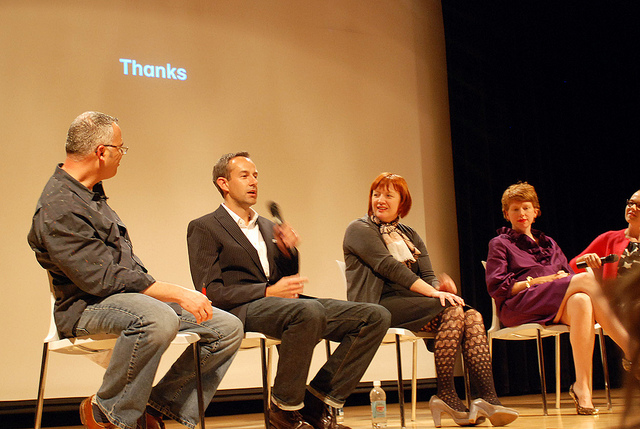
Speakers Need To Realize Their Audience May Be Different From Them <p>(c) - 2008</p>

Speakers Need To Realize Their Audience May Be Different From Them (c) - 2008

When you think of the perfect speech in your mind, what do you see? Do you see yourself up on a stage giving a speech, reaching the end, and then having everyone stand up and applaud until their hands grow tired? Nice picture. However, all too often that doesn’t happen. There are lots of reasons for this, but one big one is because we don’t take the time to fully know our audience

Why Bother?

Why give a speech in the first place? There always has to be a reason for us to give a speech – are we there to entertain, inform, motivate, etc. We won’t be able to do this if we don’t connect with our audience. We won’t be able to connect with our audience if we don’t know who they are.

It’s way too easy for a speaker to make assumptions about the audiences that we are talking to. The biggest mistake is to assume that they see the world the way that we do. Craig Harrison points out that by presuming that the audience thinks the way that we do we risk offending them – perhaps without even realizing it.

It Takes A Village To Give A Speech

The right way to go about getting an audience on your side is to tackle three big issues right off the bat in any speech that you are giving:

  • Acknowledge Differences: What makes you different from the majority of your audience? You realize this and your audience realizes it. Deal with it in a way that shows respect. If you are an older speaker talking to a much younger audience you could start out by saying “I realize that you are out there looking at me and thinking to yourself that I may be old enough to be your parent; however, don’t worry – I won’t be telling you that you should visit your mother more, that you really should be getting more sleep, or asking when you’ll finally be getting married. Instead, how about if we talk about…
  • Include Everyone: Not only are you an outsider to your audience, there is a good chance that a lot of people in your audience are outsiders to the rest of the audience. Use the opening of your speech to unite everyone together at least on a single issue. An example might be “I realize that we all live in different neighborhoods, go to different schools, and attend different churches, but the proposed change in how property taxes are calculated will affect us all and that’s what I’d like to talk to you about tonight.
  • Mind Your Reputation: Before you even open your mouth, the audience has pre-judged you. It might be based on the information that was used to advertise the event or perhaps you are known for some past deed. Dealing with this right off the bat will allow your audience to get by it and start to listen to what you have to say. One way to do this would be “I come from the sunny state of Florida where you might think that just about everyone is retired and just living off of Medicare. However, there are a few of us who are still working and we care just as much, if not more, about the current debate over healthcare reform…

Final Thoughts

Giving a speech is a tough job. Giving a good speech is even tougher. You need to have your audience working with you, not against you if you want to have any hope of making an impact. The first step in accomplishing this is realizing that your audience is different from you.

Once you acknowledge this, then you need to work to include them and dispel any preconceived ideas that they may have about you. Learn to do this well and you’ll be able to intimately connect with your audience and make an lasting impact in their lives.

Click here to get automatic updates when The Accidental Communicator Blog is updated.

What We’ll Be Talking About Next Time

Have you ever heard the expression “one size fits all“? Something that too many public speakers don’t realize is that you need to create different speeches for different size audiences. There is no such thing as the one-size-fits-all speech.

Real Life Speeches: Alan Greenspan Gives A Keynote

Tuesday, June 9th, 2009
Alan Greenspan Gave A Keynote Speech At The HIMSS Conference

Alan Greenspan Gave A Keynote Speech At The HIMSS Conference

Even if you don’t work in the world of high-finance, you surely know who Alan Greenspan is. He was the chairman of the U.S. Federal Reserve from 1987 to 2006. There’s no question that this guy is smart, but can he deliver a good keynote speech?

Where It Happened

While attending the recent HIMSS health care show up in Chicago, I had an opportunity to watch Greenspan in action as he gave a keynote speech. Now you have to understand that he was speaking on the third day of a 3-day conference and generally the crowds would have thinned out by now, but that wasn’t the case. The hall in which he gave his speech had a seating capacity of between 15,000 – 20,000 and it was pretty much full.

What caught my interest was that people were not showing up because they thought that Greenspan was a good speaker. No, they were showing up because they wanted to hear the information that they thought that he would be communicating: how did the current recession come about and when will it end?

The Introduction

The lead up to Greenspan’s keynote speech was a spectacular Hollywood introduction. Lights flashed, the speakers boomed with an announcer’s voice, and a brief film played that showed all of Greenspan’s many accomplishments. This was followed up by the Chairman of the HIMSS organization coming on stage and reading a prepared introduction for Greenspan. What speaker could ask for a better intro?

The Speech

So I know that the question that you are dying to have answered is “how did he do?”. The answer is that Alan Greenspan is not a very good keynote speaker; however, the audience hung on his every word. Perhaps some explination is needed here:

  • Technical Knowledge: Greenspan knows his stuff. He was there to explain how the U.S. economy works and the introduction plus the words that came out of his mouth confirmed that he really knows his stuff.
  • Hands: Greenspan’s #1 problem with public speaking is that he, just like so many other speakers, has no idea what to do with his hands. During his keynote speech his hands spent the time traveling from his pants pockets to being clasped and back again. It was a big room and only his face was displayed on the jumbo-tron screens, but it was distracting none the less.
  • Technical Content: I’m not sure what the rest of the audience was expecting, but I was anticipating a watered-down speech on basic economics. I was flat out wrong. Greenspan held no punches back and used very technical economic terms in his speech about how the world’s economy operates.
  • Pacing: The stage that Greenspan was giving his keynote speech on was HUGE. He was equipped with a wireless mic and so he could go anywhere. Unfortunately, he did. He paced back and forth and moved from side to side. Now there is no problem doing this if it supports your speech, but there was no clear linkage between his movements and his speech.
  • Using Notes: The first 25% of Greenspan’s keynote was delivered pretty much how you would expect a keynote to be delivered – he had some notes that he referred to occasionally, but the rest of the time he looked at the audience and spoke. However, just a little bit of the way into his speech, something strange happened – he picked up his notes and started reading from them word-for-word. The impact of his speech went way down when it felt like he was reading a book to us.

What Was Learned From All Of This

I had been very excited to listen to Greenspan speak – he is basically a rock-star in the world of finance. I came away from his keynote speech feeling just a little bit let down. On one hand, I was amazed at just how powerful a reputation can be in drawing people to come to a speech just to hear what the speaker has to say. Substance over style so to speak.

On the other hand, the reading word-for-word from notes really disappointed me. Then an interesting thing happened, I think that I figured out why he did it. Greenspan seemed to be a perfectly competent speaker. I don’t think that he NEEDED to read his speech from his notes. However, I now think that he is such an important person that the words that come out of his mouth can still move markets.

This means that, just like the President of the Unites States, he has to be very careful about what he says (and how he says it). If he had said that “… the recession is going to last for another 5 years…” then the stock market would have plunged the next day. Perhaps reading his speech was a way to protect us all from words that are too powerful…!

Questions For You

Have you ever attended a speech because you really wanted to know more about what was going to be talked about? Did you attend because you knew that the speaker was good or despite who the speaker was? How did it turn out – did you get what you wanted? Leave me a comment and let me know what you are thinking.

Click here to get automatic updates when
         The Accidental Communicator Blog is updated.

What We’ll Be Talking About Next Time

One question that I keep getting asked over and over by speakers that I am working with is if storytelling is such a powerful communication tool, then why isn’t it used more in business settings? It’s a good question, but the answer is a little bit complicated…

Paid Presentations: How To Become A Professional Speaker

Monday, December 8th, 2008
Becoming A Professional Speaker Requires A Great Speech And Business Skills

Becoming A Professional Speaker Requires A Great Speech And Business Skills

Not everyone dreams of becoming a paid presenter; however, as we labor over a speech we have all had that thought that started something like “I am NOT being paid enough for all that I do”. Considering how many people are terrified of public speaking, if you can do it and do it well, why not give some thought to “turning pro”?

One note of caution before we start this discussion: it’s been said that in the world of professional speakers, 1% of the speakers make 99% of the money. What that really means is that it’s not just enough to be able to speak in public, but rather you also need to have good business sense.

Jane Atkinson has spent two decades working in the professional speaking business and she knows a thing or two about what it takes to be successful as a pro. Here’s are a few suggestions that she has for those who are considering trying to make some cash from this speaking thing:

  • Where Will The Money Come From? If you want to speak professionally, you are going to need to get paid. The key here is to find out who will be willing to pay you for your speech. You need to have unique information or a unique style that is going to help someone solve a problem. Once you know what problem you can solve, you need to find out who has that problem.
  • Move From Free To Fee: Everyone would like to get paid for every speech that they give from day 1, but life doesn’t work that way. Instead, what you need to do is to start your professional speaking career by giving free speeches and then the paid gigs will follow.
  • I.T.S.S.: It’s the speech, stupid! At the end of the day, it’s your speech that people will be paying to hear. It’s got to be the very best speech that you can give. What this means is that you’ve got to create the speech and then refine, refine, and refine it again.
  • Well, Aren’t You Special: If you expect people to pay to hear you speak, then you had better come up with a bio that paints you as being a special person. Your bio should clearly state why anyone would want to hire you.
  • Learn From The Pros: If you want to be a professional speaker, then you need to start spending time hanging out with other professional speakers. You will learn the most from those who are currently making a living speaking professionally.
  • Mind Your Business: Although the speaking part is what people are buying, it’s really a small business that you are running. This means that you need to be taking care of sales, marketing, accounting, etc. Lots of speakers are great speakers but end up failing because they forget to run the business.

Have you ever thought about speaking professionally? Do you know what topic you would speak on? Do you spend time with professional speakers? What have they taught you about the business? What do you think I left off of my list? Leave me a comment and let me know what you are thinking.