Posts Tagged ‘humor’

Not Funny: What’s A Speaker To Do About Unacceptable Humor?

Tuesday, July 20th, 2010
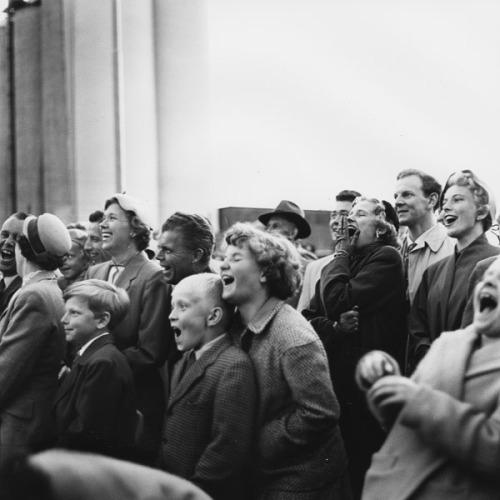
Image Credit When Speaking, You Do Really Have To Be Careful About What You Say

When Speaking, You Do Really Have To Be Careful About What You Say

Humor, how do I love thee? Let me count the ways. Well, maybe not – simply because although I do like using humor in a speech; however, it’s a tricky beast and it can turn on you at any moment. Just how is a speaker supposed to determine when some form of humor is inappropriate for the audience that he / she is speaking to?

The Test

Humor is a powerful tool for any speaker. The right words used at the right moment during your speech can cause your audience to laugh, loosen up, and start to really get into what you are talking about. However, humor has a dark side.

Once those words have left your mouth, there is no getting them back. What this means is that you’ve got to figure out if you really want to say them before you utter them.

What’s needed here is some sort of litmus test that would allow you to make that yes/no decision BEFORE you firmly stick your foot into your mouth. Professional speaker John Kinde believes that the best way to test something before you say it is to ask yourself if you’d be comfortable saying it in front of a corporate audience if you had been paid to come and talk to them? Now that’s food for thought…

Danger Will Robinson, Danger!

Look, if you want to minimize your chances of getting into trouble by saying something that you will end up regretting later on, there are some topics that should never find their way into your speeches. You probably already know some of these: religion, skin color, and politics.

What you might forget is that there are a whole bunch of other topics that you should plan on staying away from. These include anything about the human body (functions, sizes, etc.), people’s sexual orientation, and, of course, curse words.

The list is actually much longer and you’re going to have to use your common sense to figure out what should be on it. Things change and you need to make sure that you don’t find yourself giving a speech in the middle of a minefield.

The Problem With Your Audience

Is it possible to so carefully construct your next speech that you will avoid offending anyone who happens to be sitting in your audience? Nope. Someone is always going to take offense at something that you say.

What this means is that instead of trying to avoid offending everyone, you should instead try to offend as few people as possible. How many is too many?

Estimates vary, but most professional speakers agree that ticking off less than 10% of you audience is what you should be shooting for.

What All Of This Means For You

As a speaker you have a responsibility to reach out and connect with your audience – to make an impact in their lives. Using humor is a great way to make this happen.

However, humor has a dark side and if used inappropriately you won’t be connecting with your audience, instead you’ll be offending them. Picking what you include (and don’t) in your speech is a key way to play it safe.

Give all of this, sometimes you’ll screw up. You’ll end up offending too many people based on what you included in your speech. When this happens, pick yourself up, dust yourself off, and be more careful next time.

- Dr. Jim Anderson
Blue Elephant Consulting –
Your Source For Real World Public Speaking Skills™

Question For You: What do you think the best way to determine if a piece of humor is over the line for a given audience?

Click here to get automatic updates when The Accidental Communicator Blog is updated.

What We’ll Be Talking About Next Time

Speaker Alert: Make Me Laugh — Or Else

Tuesday, October 27th, 2009

Audiences Who Laugh Remember What You Say

Make Your Audiences Laugh And They'll Remember What You Say

Stop. How funny was the last speech that you gave? What – you were talking about how best to diversify a 401k basket of investments in order to incorporate more foreign exchange funds & there’s nothing funny about that? Wrong. You’re not trying hard enough. Stop being not funny.

Learn To Be Funny From A Politician

Every speech counts. Especially if you are trying to get elected. If there was any group of speakers who needed to find a way to get people to remember them & their message, it would be politicians. They have three goals every time they give a speech:

  • Promote their policies
  • Boost their accomplishments while minimizing their opponents
  • Impress people with their moral upstanding character & leadership skills

Politicians know that humor is a powerful speaking tool. They use it to both make a point as well as to illustrate that point for their (or your) audience.

In the end, it’s all about getting votes. You’re probably not running for anything right now, but why waste a speech?

Why Humor Is So Powerful When You Are Speaking

Every speech that you give is your next chance to change the world. Adding humor to your speaking style isn’t something that you can put off until “sometime”, you’ve got to do it right now.

The reason that humor works so well comes down to five basic “levers” that every audience has. Gene Perret who won several Emmys for his work in television has spent a lot of time researching what these levers do to an audience:

  • Humor Makes You More Likable: I don’t care how much of a jerk you are in real life, if you start to work more humor into your speeches your audiences will start to like you better than your family does. Perret points out that it’s really hard to laugh with a person if you don’t like them – make your audience laugh and they’ll love you forever.
  • Build Credibility Using Humor: Who are you to talk to anyone about anything? Somewhat amazingly, audiences associate the ability to be funny with wisdom. When you can joke with your audience about 401k plans, they’ll settle back and say to themselves “gosh, if he can joke about this stuff then he must know it really well”. Whether or not you really do know it really doesn’t matter any more after this.
  • Get Respect Using Humor: Some of the worst speeches that I’ve ever had to sit through were ones where the speaker was too full of himself / herself. I quickly tuned them out – I don’t have time for blowhards. When you kid around with your audience you’re telling them “I’m one of you”. When they understand that you “get” them, you will have hooked them and they’ll pay attention to you for the rest of your speech.
  • Make People Want To Listen Using Humor: When you say something funny, people laugh. If they’re not listening, then they miss out. Nobody likes to miss out on something that’s funny. When you work humor into your speeches and people start to laugh, then all of those other people who are busy reading email and sending text messages will start to look around and wonder what they are missing out on. Very quickly those iPhones and Blackberry’s will go away and you’ll have their attention.
  • Make People Remember What You Say Using Humor: Stay home if you are going to give a speech that nobody is going to remember. Why bother? What humor does is it creates the possibility that people will remember the joke, and if they do then there’s just a chance that they might remember what your point was that you made the joke about.

Final Thoughts

Stop wasting my time. If you want to get up there and give a dry, lifeless speech that has no humor in it then you may as well stay at home and just send me an email with your main points.

If, however, you want me to walk away thinking that you know what you are talking about and remembering what you said, then that’s another story. The only way that that’s going to happen is if you start to work some humor into your speech. No, you don’t have to turn into a stand-up comedian; however, you do need to make me crack a smile or at least chuckle. Get me to do that and you’ve spent your time well.

Do you think that there is any type of speech that can’t have humor added to it? (Hint: eulogies are great candidates for humor so don’t even bring that up)

Click here to get automatic updates when The Accidental Communicator Blog is updated.

What We’ll Be Talking About Next Time

When I come to hear you speak, no matter if it’s at a departmental project status report or at a local restaurant or even if it was at a convention, the worst thing that you can do is to waste my time. What are you going to do about this?

How Boys Can Talk To Girls (And Visa Versa)

Tuesday, October 20th, 2009

Reaching An Audience Of The Opposite Sex Can Be Difficult (c) - 2008 by Steve Hopson

Reaching An Audience Of The Opposite Sex Can Be Difficult (c) - 2008 by Steve Hopson

Man, as though giving a speech wasn’t hard enough already, then you go ahead and throw that gender thing in there and all of a sudden it gets that much tougher! It can be a challenge when you are asked to talk to an audience made up of members of the opposite gender. How can you not screw-up this speech?

Boys Talking To Girls

Male presenters need to adapt their speeches when they are presenting to a primarily female audience. Neil Chethik has a great deal of experience presenting to female audience and he points out that even in the enlightened age in which we are living, there are still differences between the sexes and a skillful presenter has to know about these differences and find ways to steer around them.

  • R-e-s-p-e-c-t: A male presenter needs to treat his female audience with respect if he wants to have any chance of the speech going well. Women are generally willing to learn from a male presenter; however, they have to feel as though they are being respected.
  • Down To Earth: A man who starts off his presentation by telling his audience how wonderful he is will instantly lose the connection with his female audience. There’s no problem with you being an expert in your area, you just don’t want to come off as being a know-it-all. You can connect with your audience by telling a story that points out a personal failing or error and a female audience will connect with you.
  • Evidence Counts: One of the biggest errors that male presenters make when they are speaking to an all female audience is that they give an emotional presentation and leave out all of the facts. Yes, women do like stories; however, they won’t believe what you are saying unless you can back it up with hard evidence – facts & stats.
  • Humor: talk about a minefield! Many a good speech to a female audience has gone wrong when the male speaker tried to interject some humor. Your best best is to let the humor naturally flow from the stories that you are telling. Trying to work in one-liners can only lead to disaster.

Girls Talking To Boys

Yes, men have it rough when they try to address an all female audience. However, women have it at least as rough and perhaps even rougher when they are called on to present to an all male audience. Once again, there are several ways to make sure that this type of speech goes well:

  • Stand Up: One of the simplest issues for a woman to solve when she’s addressing a male audience is to make sure that they can see her. All too often,  a lectern can overwhelm a speaker and hid her from her audience. Stand on something if needed and adjust the mic so that it works correctly for your height.
  • No Expression Is Good: Often women speakers will become flustered because no matter what they say, the expressions on their male audience won’t change. It turns out that this is very normal – men don’t tend to display their emotions.
  • Be A Straight Shooter: Whereas women tend to enjoy hearing lots of stories, men tend to be more “to the point”. Clearly communicating your main points and making sure that any stories that you do tell quickly come to the point will help to hold their attention.
  • Be A Professional: Men do a good job of dealing with other men. They will struggle with any presenter who comes off as being too “girlish”. This impression can be caused by clothing, gesture, or even a vocal tone that takes away from what you have to say. Ask a male friend that you trust for help in order to make sure that this is not a problem.

Final Thoughts

Giving any presentation can be a challenge. When it is complicated by the additional challenge of having one gender present to the other gender, it can get even more tricky.

The key to making this type of speech a success is for the presenter to acknowledge the situation and adjust the presentation to match it. Men have to make sure that they show respect to their female audience and women need to not get flustered by their male audience’s lack of outward emotions.

Speakers who take the time to adjust what they are going to say and how they are going to say it when addressing the opposite gender will be able to intimately connect with your audience and make an lasting impact in their lives.

Click here to get automatic updates when The Accidental Communicator Blog is updated.

What We’ll Be Talking About Next Time

Stop. How funny was the last speech that you gave? What – you were talking about how best to diversify a 401k basket of investments in order to incorporate more foreign exchange funds & there’s nothing funny about that? Wrong. You’re not trying hard enough. Stop being not funny.

PowerPoint Tricks: Banish Boring, Invite Fun

Tuesday, August 25th, 2009

PowerPoint Can Help You Be Funny

PowerPoint Can Help You Be Funny

I would like to be allowed to see more PowerPoint slides. Ok, not really. In fact I could probably live the rest of my life without seeing another PowerPoint slide – I think that I’ve seen my limit! Since I probably can’t avoid seeing more slides, then perhaps at least we can talk about what we can do to make them more fun

It’s All About Fun

The purpose of a PowerPoint slide is to enhance your speech. Malcolm Kushner is a speaker who has spent some time looking for ways to make this happen. His thought is that we can all learn to get along with PowerPoint better if we can find ways to make our audience laugh. Malcolm has done the heavy lifting for us by searching the web for different sites that we can use to create images that will cause our audience to chuckle and warm to your main message.

A Little Help From Albert Einstein

The nice thing about Albert Einstein is that everyone knows who he was. If only there was some way we could get him to help us out with our next presentation. Well good news, we can. Take a look at this image:

Albert Knows What He's Talking About...

Albert Knows What He's Talking About...

The web site http://hetemeel.com/einsteinform.php allows you to add any text that you want to to the chalkboard that Albert is writing on. I’ve given you an example, I think that you can take it from here…!

Try A Bumper Sticker

Or a movie marquee, or a bar of soap. Taking a phrase that your audience will recognize and putting it in an image that they aren’t expecting is what will capture their imagination and help you to recapture their attention. Here’s an example:

Guess How Much This Promotion Cost?

Guess How Much This Promotion Cost?

Over at http://www.redkid.net/generator/sign.php they have 50 different images that you can overlay your company name / product name / main message. Check it out!

A Wanted Poster Always Works

Malcolm has one final suggestion for us. Once again everyone in your audience knows what an old-style wanted poster looks like. Here’s an example of what you can include in your presentation:

Look Who's Wanted!

Look Who's Wanted!

This is a great way to include an image of the person who arranged your speech or the CEO. Once the audience recognizes them and sees the context, they’ll either laugh or at least have a good chuckle.

Final Thoughts

One of the fundamental rules of life is that we all like people who are like us. As a speaker we all have the challenge of finding ways to get our audience to warm up to us within the space of our speech. Getting our audience to laugh is a great way to make this happen.

Since we all use PowerPoint slides, finding a way to use our PowerPoint slides to make our audience laugh is a great way to connect with our audience. Customizing images with a dash of either our information or some part of our audience is a great (and easy) way to do this. Spend a little time with the sites that we’ve talked about, and you’ll be able to intimately connect with your audience and make an lasting impact in their lives.

Click here to get automatic updates when The Accidental Communicator Blog is updated.

What We’ll Be Talking About Next Time

If you really want to connect with your audience and make an impact in their lives, then you’re going to have to discover out how to speak with power. The trick is that power is a tricky thing – you can’t touch it, you can’t buy it, you’ve got to find it and hold on to it. The good news is that I know how you can do this…

Dynamic Humor: What’s A Public Speaker To Do?

Wednesday, September 24th, 2008
Dynamic Humor Can Win Your Audience Over

Dynamic Humor Can Win Your Audience Over

In real estate, they say that the value of a property is based on location, location, location. In speaking, you can divide your speech up into three separate parts: the opening, the body, and the closing. I firmly believe that the value of your speech is all about the opening, opening, opening.

Studies have shown that you have everyone’s attention when you are starting your speech. As more words tumble out of your mouth, you will lose more and more of your audience as they start to tap on their BlackBerrys, talk with the neighbor, or boot up their laptop. How can you connect with your audience right off the bat – and hold their attention for your entire speech? One word: humor.

Perhaps this is a good time for me to be very, very clear: I’m not talking about “classic jokes” – you know the type that begins “Two men walk into a bar and…”. Instead, the kind of humor that I’m refering to probably better called off-the-cuff humor. The most dangerous kind of humor!

Why take the risk of using dynamic humor? Simple, the payoffs are so great that it’s well worth the risk. The key is to identify where you are going to get your raw material for your dynamic humor. What you need to do is before your speech starts, you need to place yourself in your audience’s position. What are they feeling? Is the room hot or cold? Is there a distracting noise? What did the previous speaker say – did he say something shocking or controversial? Don’t forget food, if breakfast or break snacks have been served then how did that go?

By realizing what your audience has experienced, you can do one of three different things:

  • Create an analogy
  • Take things to an extreme
  • Make a word association

Another source of great dynamic humor material is to take a look at the demographics of your audience: is it all women, all men, young, old, Northerners? Finally, take a careful look at the agenda for the event. If you’ve been asked to talk about next year’s business cases and the person who comes after you will be talking about budget cutbacks for next year, then you’ve got to comment on this!

How do you use humor in your speeches today? Do you prepare “classic jokes” to start your speeches off? Do you use dynamic humor in your speeches currently? Have you ever run into problems with creating humor off-the-cuff? Leave a comment and let me know what you are thinking.